
How AI Is Transforming Education: Personalised Learning, Classroom Tools and Challenges

A teacher asks a class to write a paragraph, and within minutes each pupil receives feedback matched to their level. A student who struggles with reading listens to text aloud while key words are highlighted. A school leader spots attendance patterns before they become a safeguarding concern. None of this replaces the human work of education, but it shows how AI is changing what happens around it.
Artificial intelligence is now moving from experiment to everyday tool. In schools, colleges and universities, it can support planning, feedback, assessment, access, data handling and home learning. Used well, it gives educators more time for the work that only people can do: building trust, spotting nuance, motivating learners and creating a safe place to think.
Used poorly, it can widen gaps, introduce bias, weaken privacy and make learning feel mechanical. The real question is not whether AI belongs in education. It is how educators and decision-makers can use it with care, purpose and clear boundaries.

AI is changing the role of the teacher
AI does not remove the need for teachers. If anything, it makes expert teaching more visible.
A good teacher does far more than deliver information. They read the room. They notice when a learner is quiet for the wrong reason. They know when to push, when to pause and when a child needs confidence more than correction. AI cannot replace that judgement.
What it can do is take on some of the repetitive work that competes for a teacher’s attention. For example, AI tools can help:
Draft quiz questions from a topic outline
Suggest different reading levels for the same source material
Create practice problems with worked solutions
Summarise long documents for planning
Give early feedback on grammar, structure or vocabulary
Translate key instructions for families who speak another language at home
Tools such as ChatGPT, Microsoft Copilot, Google Gemini and subject-specific platforms can act as planning assistants. A teacher might ask for three ways to explain photosynthesis to Year 7 pupils, or request a set of discussion prompts for a history lesson on industrialisation.
The teacher still checks, adapts and improves the output. That step matters. AI can be confident and wrong. It can also produce bland lessons unless a teacher adds local context, clear learning goals and knowledge of the class.
The best use is not “write my lesson for me”. It is closer to “give me a starting point, then I will make it teachable”.
Personalised learning is the most powerful promise
For decades, educators have tried to meet learners where they are. The challenge is scale. In a class of 30 pupils, one student may need extra practice, another needs more challenge, and another needs the same idea explained in a different way.
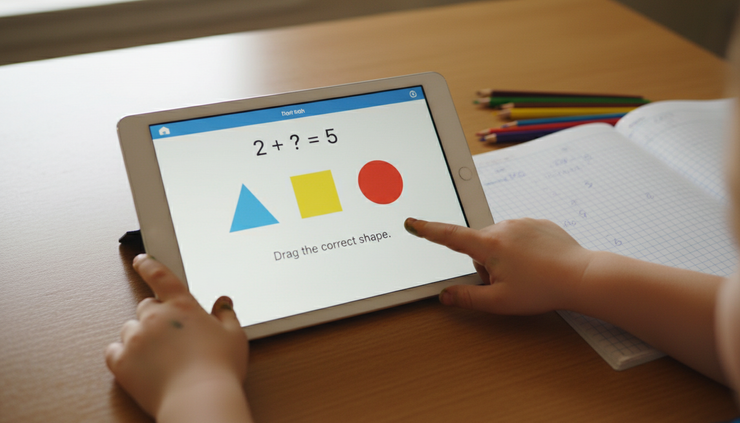
AI can help by adapting tasks and feedback in real time. Personalised learning systems use data from a learner’s answers, pace and patterns of mistakes to suggest the next activity. If a pupil struggles with fractions, the system can offer simpler examples, visual support or more practice. If they grasp the concept quickly, it can move them on.
Examples include adaptive maths platforms, AI-supported language learning apps, reading assistants and tutoring tools. Duolingo uses AI methods to adjust language practice. Khan Academy’s Khanmigo is designed as an AI tutor and teaching assistant. Quizlet and similar study tools can generate practice questions from notes and flashcards.
This matters because feedback is often most useful when it arrives quickly. A student who waits a week to find out they misunderstood a concept may keep practising the wrong thing. An AI tutor can respond instantly, helping them correct course while the lesson is still fresh.
Personalisation should not mean isolation, though. Learning is social. Students need discussion, debate, shared problem-solving and encouragement. AI can support individual progress, but it should not turn education into a private screen-based journey.
The strongest model is blended. AI handles some practice and feedback, while teachers create meaning, connection and challenge.
Classroom tools are becoming more practical
AI in education is not one single product. It appears in many tools, some obvious and some almost invisible.
Personalised Learning: AI tutors and homework support
AI tutoring tools can guide learners through questions step by step. Rather than simply giving an answer, the better tools ask prompts such as, “What do you already know?” or “Which formula might help here?” This mirrors the kind of questioning a teacher might use.
These tools can be helpful outside class, especially for students who do not have easy access to paid tutoring or a quiet adult helper at home. They can also support revision by explaining topics in different ways.
The risk is overdependence. If a tool gives too much help, students may skip the struggle that builds understanding. Schools need clear rules on what counts as support and what counts as doing the work for the learner.
Writing and feedback tools
AI writing assistants can help students plan, edit and review their own work. They can suggest clearer phrasing, flag grammar issues or ask whether an argument needs evidence.
For teachers, AI can help create rubrics, sample answers and feedback banks. It can also highlight common issues across a set of responses, such as weak topic sentences or missing references.
Still, writing is not only a product. It is a way of thinking. If students outsource too much of it, they lose the chance to develop voice, judgement and reasoning. Teachers may need to design tasks that include oral explanation, drafts, reflections and in-class writing so they can see the learning process.
Accessibility tools
Some of the most valuable AI uses are not flashy. They simply make learning more accessible.
Speech-to-text can help students who struggle to write quickly. Text-to-speech can support readers with dyslexia, visual impairments or fatigue. Live captions can help deaf learners and students working in a second language. Translation tools can help families understand school messages and homework expectations.
These tools can reduce barriers without lowering expectations. They give students more ways to show what they know.
Creative and practical learning tools
AI image, music and simulation tools can support creative subjects, design tasks and science learning. A class might use an AI simulation to test how changing one variable affects an ecosystem. Art students might compare AI-generated images with their own sketches to discuss composition and originality. Design and technology learners might use AI to brainstorm product ideas, then evaluate which are practical and ethical.
The most useful tasks ask students to critique AI, not just consume it. Why did the tool make that suggestion? What did it miss? Which output is biased, shallow or inaccurate? This turns AI into a subject of learning as well as a tool for learning.
AI can reduce admin pressure
Education systems generate a huge amount of paperwork. Attendance, assessment records, behaviour logs, reports, timetables, lesson resources and parent communication all take time. AI can help with some of this load.
For teachers, admin support might include:
Turning lesson notes into a draft handout
Grouping common assessment mistakes
Drafting plain-language summaries for parents and carers
Creating differentiated worksheets from the same learning goal
Organising resources by topic and difficulty
For school leaders, AI can help spot patterns in attendance, assessment and behaviour data. A system might show that a group of pupils is falling behind in a specific topic, or that absences are rising on certain days. Staff can then investigate and respond sooner.
This can make schools more responsive. It can also free time for mentoring, lesson improvement and family contact.
Yet data use needs caution. A dashboard can show a pattern, but it cannot explain the whole story. A pupil’s attendance may be affected by illness, caring duties, transport issues or anxiety. AI can point to a question. People must handle the answer.

Students gain support, confidence and new skills
AI can benefit students in several clear ways.
The first is timely support. Learners can ask questions when they get stuck, even outside lesson time. For pupils who feel embarrassed asking in class, a private tool can lower the barrier.
The second is practice without judgement. Students can repeat vocabulary drills, maths problems or pronunciation exercises as often as needed. That can build confidence before they take part in group work or formal assessment.
The third is choice of format. Some students learn better through audio, visuals, examples or step-by-step prompts. AI can present the same idea in different formats, which helps more learners access the curriculum.
AI also prepares students for a world where these tools will be common in work and civic life. Education should not pretend AI does not exist. Students need to learn how to use it responsibly, question its output and understand its limits.
That means teaching AI literacy, including:
How AI systems generate responses
Why outputs can be biased or false
How to check claims against trusted sources
When to cite or declare AI use
Why personal data should be protected
How to use AI without losing original thought
These skills belong across the curriculum, not only in computing lessons.
Teachers gain time, insight and more options
For teachers, the most immediate benefit is time. Not unlimited time, and not automatic time, but enough to matter when tools fit real classroom needs.
A teacher might use AI to produce three versions of the same reading task, then spend their energy choosing the right one for each group. Another might use it to draft feedback prompts, then personalise the comments that matter most. A head of department might use it to compare curriculum coverage across year groups and find gaps.
AI can also support professional learning. Teachers can use tools to rehearse explanations, generate examples, or explore common misconceptions in a subject. Early career teachers may find this especially useful when building lesson materials, though they still need mentoring from experienced colleagues.
The key is agency. AI should serve the teacher’s intent. Schools should avoid introducing tools that add logins, extra monitoring or poor-quality suggestions. If a system creates more work than it saves, it belongs in the bin.
The challenges are real and need direct answers
AI brings benefits, but education cannot afford blind enthusiasm. Schools deal with children’s data, life chances and public trust. That raises serious questions.
Privacy and data protection
AI tools may collect student work, usage patterns, voice data or personal details. Schools need clear rules about what data is shared, where it is stored and who can access it. In the UK, this connects to data protection duties and safeguarding responsibilities.
Before adopting a tool, leaders should ask:
What student data does it collect?
Can the provider use that data to train future systems?
Is parental consent needed?
Can data be deleted?
Does the tool meet the school’s safeguarding standards?
A free tool may still carry a cost if it puts pupil privacy at risk.
Bias and fairness
AI systems learn from data created by people, so they can reflect human bias. An AI marking tool might favour certain writing styles. A behaviour prediction system might unfairly flag some groups. A translation tool might miss cultural meaning.
Schools should test tools with diverse learners and review outputs regularly. Staff should also keep final decisions in human hands, especially for assessment, behaviour and support.
Accuracy and trust
AI can produce false information in a fluent tone. Students may believe it because it sounds confident. Teachers face the same risk when using AI for planning.
This makes verification essential. AI-generated facts, references and explanations need checking against reliable sources. The tool can help draft, but it should not become the authority.
Academic honesty
Generative AI makes plagiarism harder to define. A student might ask for a full essay, a paragraph rewrite, a plan or a grammar check. These are not all the same.
Schools need clear, age-appropriate policies. They should define acceptable use by task. For example, AI might be allowed for brainstorming but not for final writing. Students should learn how to declare help rather than hide it.
Detection tools are not a perfect answer. They can make mistakes, and false accusations damage trust. Better assessment design can help, including oral questioning, process journals, handwritten work, in-class tasks and personalised topics.
Access and inequality
If some students have paid AI tutors at home and others have no reliable internet, AI could widen existing gaps. Schools should think about access from the start. This may mean providing supervised use in school, choosing tools that work on shared devices, and avoiding homework tasks that assume every pupil has the same technology.
What good AI use looks like in education
The best AI use starts with a learning problem, not a shiny tool.
A school might ask, “Where are students losing confidence in maths?” or “How can teachers give better feedback without working late every night?” Only then should it choose technology.
Good practice has a few common features:
Clear purpose
Staff know which problem the tool is meant to solve.
Transparent rules
Students know when AI use is allowed and how to declare it.
Training for staff
Teachers get time to test tools and share what works.
Human oversight
Teachers and leaders check outputs and make final decisions.
Privacy by design
Data is protected before the tool reaches the classroom.
Regular review
The school checks whether the tool helps learning in practice.
A small pilot often beats a whole-school rollout. Let teachers test the tool with one unit, one year group or one admin task. Gather feedback from staff and students. Check whether it improves learning, saves time or supports inclusion. If it does not, stop using it.

The future of AI in education should be human-centred
AI will keep improving. Tools will become more natural to talk to, better at handling images and sound, and more closely connected to learning platforms. Students may soon use AI tutors that remember their progress across subjects. Teachers may get faster support for planning, feedback and intervention.
The future should not be a classroom run by algorithms. It should be a classroom where technology removes some barriers and gives people more room to teach and learn well.
That requires a balanced mindset. Educators do not need to accept every new tool. They also do not need to reject AI because it feels unfamiliar. The strongest approach is curious, critical and practical.
AI can help personalise learning, reduce admin pressure, improve access and give students new ways to practise. It can also create risks around privacy, bias, accuracy and fairness. The difference lies in the choices schools make.
The goal is not to make education more automated. The goal is to make it more responsive, more inclusive and more focused on the human moments that change how learners see themselves.


Comments